15th Group
Nitrogen (N)
- **Default: ** NH3
-
Molecules:
-
Neutral atoms
- Implicit hydrogens are added to have 3 bonds (if nitrogen has at least 1 bond).
1
2
3
4
5
  More than 3 bonds are forbidden.

  If nitrogen has 4 ligands, charge is not set, hence not accepted

  Pentavalent N is accepted in traditional form by default, but keep in mind that these forms are not correct. Use the "ylide" from of the N atom which satisfies the correct valence electron count:
- Implicit hydrogens are added to have 3 bonds (if nitrogen has at least 1 bond).
-
| traditional form | "ylide" form |
|---|---|
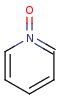 |
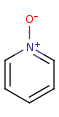 |
 |
 |
 |
 |
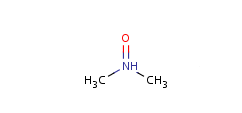 |
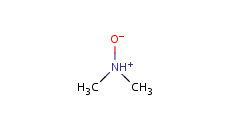 |
1 | |
* Charged atoms in a molecule:
1 2 3 4 5 6 7 8 9 10 11 12 13 14 15 | |
* *Radical: * Every added radical on these atoms decreases by one the number of bonds. Maximum three added radical is allowed.
* Aromatic compounds: Nitrogen may form aromatic bonds as well.
Phosphorus (P), Arsenic (As), Antimony (Sb), Bismuth (Bi)
- Default: PH3, AsH3, SbH3, Bi
-
Molecules:
-
Neutral atoms:
- 1 bond: 2 implicit Hydrogens are added.
- 2 bond: 1 implicit Hydrogen is added.
- 3 bond: 0 implicit Hydrogen is added.
- 4 bond: 1 implicit Hydrogen is added.
- 5 bond: 0 implicit Hydrogen is added.
- More than 5 bonds are forbidden
-
Charged atoms in a molecule:
-
Positive charge:
- 1+: 4 bonds are necessary (including implicit Hydrogens).
- 2+: 3 bond is necessary (including implicit Hydrogens).
- 3+: 2 bond is allowed.
- 4+: 1 bond is necessary (including implicit Hydrogens).
- 5+: 0 bond is allowed.
- 6+ or more: not allowed
- Negative charge: Every added negative charge decreases by one the number of possible bonds. Maximum charge accepted is -3.
-
- *Radical: * Every added radical on these atoms decreases by one the number of bonds. Maximum three added radicals are allowed.
- Aromatic compounds: Phosphorus may form aromatic bonds as well.
-